
Claude news May 2026
116 updates from Claude and Anthropic in May 2026, from product launches to research papers, each with a short satori. note on what it means for a European business.
Claude for Small Business takes the operational weight off your week so you can spend more time wher
e it counts. Get started: https://lnkd.in/gKBUhUYf
Claude for Small Business is in English for now. The small business angle is no longer an afterthought, it is where the growth is.
Before we ship a new model, these teams try to break it.
They build with it inside their own organizations and push it to its limits. When something falls short, they tell us what they'd need instead.
Bringing test teams into development early gives a level of quality that SaaS companies should copy. It is also how we work internally at satori.
Before we ship a new model, these teams try to break it.
They build with it inside their own organizations and push it to its limits. When something falls short, they tell us what they'd need instead.
Reposted on Anthropic Research, and the point stands, external red teaming makes models better. Internal testing is not overhead, it is the precondition.
Before we ship a new model, these teams try to break it.
They build with it inside their own organizations and push it to its limits. When something falls short, they tell us what they'd need instead.
Red teaming inside your own organisation is what companies miss when they test AI in a pilot room with five users. Scale the problems into view rather than around them.
Before we ship a new model, these teams try to break it.
They build with it, push it to its limits, and tell us where it falls short. What they find makes the final model better.
Stress-testing models internally before release is the difference between a demo and operations. Companies that copy and paste AI without their own testing culture pay the price in production.
Before we ship a new model, these teams try to break it.
They build with it, push it to its limits, and tell us where it falls short. What they find makes the final model better.
Earlier this month, our run-rate revenue crossed $47 billion.
This growth has been driven by organizations across many industries deploying Claude in their core operations.
A run-rate of 47 billion in twelve months shows that enterprise use is where the hockey stick is. Decision makers who hold back will pay dearly later.
We've raised $65 billion in Series H funding at a $965 billion post-money valuation, led by Altimete
r Capital, Dragoneer, Greenoaks, and Sequoia. This investment will help us advance our research and expand our capacity to meet growing demand for Claude.
47 billion in run-rate says Claude is not an experiment. Companies waiting for the market to calm down are missing the window.
Anthropic raises $65B in Series H funding at $965B post-money valuation
Anthropic secured 65 billion dollars in Series H funding and is now valued at 965 billion dollars.
A valuation of 965 billion says one thing, Claude is no longer an experiment. Companies waiting for the technology to mature are missing the train.
Claude Opus 4.
8 is available today on the web, the Claude Platform, and all major cloud platforms.
A simultaneous release on cloud platforms means your choice of provider is no longer a bottleneck for which model you get access to.

Introducing Claude Opus 4.8
Anthropic launches Claude Opus 4.8 with sharper judgement, more honest self-reflection and the ability to work independently for longer.
Opus 4.8 at the same price is a gift for companies testing AI on real work. Sharper judgement means fewer corrections and more delivery.
We're upgrading Claude Opus to a new version: Claude Opus 4.
8. It builds on Opus 4.7 with sharper judgment, more honesty about its own progress, and the ability to work independently for longer than its
Opus 4.8 arriving in Claude Code on the same day the model ships means zero friction between model and tool. A real difference compared with many other stacks.
We're upgrading Claude Opus to a new version: Claude Opus 4.
8. It builds on Opus 4.7 with sharper judgment, more honesty about its own progress, and the ability to work independently for longer than its
Opus 4.8 in Claude Code is where development teams gain the most. Hand off a migration and focus on the next one instead of babysitting.
Also new in Claude Code: dynamic workflows (research preview).
For the hardest tasks, Claude makes a plan, runs hundreds of parallel subagents, and verifies its work before reporting back. Think a migration touching hundreds
Dynamic workflows is where it gets interesting. Hundreds of subagents in parallel can do migrations in an afternoon that used to take weeks.
Introducing Claude Opus 4.
8: it builds on Opus 4.7 with sharper judgment, more honesty about its own progress, and the ability to work independently for longer than its
Opus 4.7 was already strong. 4.8 working independently for longer means less hand-holding for teams that want to scale their AI use.
Introducing Claude Opus 4.
8: it builds on Opus 4.7 with sharper judgment, more honesty about its own progress, and the ability to work independently for longer than its
Anthropic opens Milan office to support Italian enterprise, research, and developers
Anthropic opens its sixth European office in Milan to support Italian businesses, research and developers.
A sixth European office, this time in Milan. For Italian companies it means local support, and for the rest of Europe it is another sign that Anthropic is taking the continent seriously.
Coding agents in the social sciences
Only 20 percent of social scientists use coding agents regularly, but they produce more papers than their colleagues.
The pattern is universal, the twenty percent who dare to test pull ahead. It applies to research and it applies to small businesses. The technology is not the bottleneck.
Michele Catasta is President and Head of AI at Replit, the platform where anyone can build software
in natural language. At 16, he set out to make software open to everyone. Today, over 50 million people are building on Replit with Claude.
Replit shows that the threshold for building software is falling. For companies it means domain knowledge matters more than the codebase, sooner than you think.
From The Problem Solvers, our series featuring founders taking on hard problems with Claude.
The Problem Solvers series is good inspiration for business leaders who do not know what to do with Claude. Concrete examples beat abstract promises.
New in the Claude Marketplace: Augment Code, bolt.
new, CodeRabbit, Hebbia, and Legora. Apply your existing Anthropic spend commitment toward their Claude-powered products.
Being able to put Claude spend towards third-party tools lowers the threshold. Fewer purchasing decisions and a faster route into operations for companies that want to test broadly.
New in the Claude Marketplace: @augmentcode, @boltdotnew, @coderabbitai, @hebbia, and @WeAreLegora
Apply your existing Anthropic spend commitment toward their Claude-powered products. Learn more: http://claude.com/platform/marketplace
A marketplace that uses existing spend commitments is smart. The credits you have already bought suddenly go further than you thought.
Anthropic appoints KiYoung Choi as Representative Director of Korea ahead of Seoul office opening
Anthropic appoints KiYoung Choi as Representative Director for Korea ahead of the Seoul office opening.
Korea gets its own entity and a local lead before the office even opens. The map of AI is being redrawn faster than most market reports manage to update.
New on the Engineering Blog: The access and permissions we grant agents should evolve with their cap
abilities. In our own products, we set these parameters through sandboxing, which limits the scope of any potentially destructive actions.
Sandboxing is what IT security leaders need to hear, AI agents do not get free access, they get clear limits. That is how we run it with clients too.
Six Claude projects that all came from the same question: "why not
"
Why not as the driving force of a product roadmap. That is roughly how we start most client projects too.
Anthropic co-founder Chris Olah was invited to speak at today's presentation of Pope Leo XIV's
encyclical "Magnifica humanitas." Read the full text of his remarks: https://lnkd.in/eJrduBdB
The LinkedIn version of the Olah speech. When Anthropic Research posts it on the company feed you know it is more than a symbolic gesture, it is positioning.
Anthropic co-founder Chris Olah was invited to speak at today's presentation of Pope Leo XIV's
encyclical "Magnifica humanitas." Read the full text of his remarks:
A teaser on X for the same encyclical speech. Rare to see an AI founder on a Catholic Church stage, and it says something about where the conversation is heading.
Anthropic co-founder Chris Olah's remarks on Pope Leo XIV's encyclical "Magnifica humanitas"
Anthropic co-founder Chris Olah calls on the world to engage in AI safety together with the Church, and warns that AI labs are shaped by commercial and geopolitical incentives.
An AI founder standing at a papal presentation and warning about market forces is not ordinary PR. Worth reading before the next board discussion about AI strategy.
How we contain Claude across products
Anthropic describes three containment strategies for agents, ephemeral containers, sandboxes and virtual machines.
Security thinking around AI agents is maturing fast. Good reading for IT managers who still believe AI and control are opposites.
Patching these vulnerabilities will make us safer.
But the software industry will need to adapt to the volume of vulnerabilities that models like Claude Mythos Preview will be able to find. We
The whole industry needs to learn to handle the pace at which AI finds bugs. The bugs are no longer the problem, the speed at which they are discovered is.
Last month we launched Project Glasswing, our collaborative AI cybersecurity initiative.
Since then, we and our partners have found more than ten thousand high- or critical-severity vulnerabilities in essential software.
The X version of the Glasswing update. Ten thousand security holes in a month. CIOs should start working out what that means for their supplier contracts.
Vercel got more out of Claude Code by giving it room to improvise instead of a custom tool for every
job. Guillermo Rauch joins Anthropics Angela Jiang to break it down at Code with Claude. Watch the full talk here: https://lnkd.in/eCxrXmT3
Guillermo Rauch at Vercel explains why building fewer tools works better. A lesson for us all, stop micromanaging Claude and give it room to solve the problem.
Project Glasswing: An initial update
Anthropic launches Project Glasswing to secure critical software before AI models can exploit it, and is already finding thousands of security gaps.
Claude already finding thousands of security holes is more than cool. It means that if we do not start patching with AI help, attackers will get there first.
Kay Zhu is the co-founder and CTO of Genspark, the all-in-one AI workspace built on Claude.
In a market moving this fast, where anyone can build, he thinks the team is what makes the difference. More from The Problem Solvers: https://lnkd.in/eyVp8Qgm
The LinkedIn version of the same interview. Genspark is one of the few AI companies actually growing with Claude at its core. Worth a look.
Kay Zhu is the co-founder and CTO of @genspark_ai, the all-in-one AI workspace built on Claude.
In a market moving this fast, where anyone can build, he thinks the team is what makes the difference:
The team decides, not the model. Easy to forget when everyone talks parameters and tokens. The same goes for any company, the people driving the project are what matter.
From The Problem Solvers, our series featuring founders taking on hard problems with Claude: https:/
/claude.com/problem-solvers
A talk series with founders solving real problems with Claude. Worth a lunch break if you want to see how productive it can get in practice.
What are you making with Claude Design?
A classic community question, yet the point is worth thinking about. What would you actually build if the tool could deliver your whole idea during a coffee break.
magical pond background.
made with claude design
A little soft advertising for Claude Design. Soon clients will expect marketing material to roll out in an afternoon, not a month.
Tinkering, prototyping, and seeing what happens with Claude Design:
Claude Design for tinkering. It does not always have to be about production, and playing with the tool is often where the best understanding grows.
Use this guide to figure out where you are on the Claude Code learning curve, and where to go next.
Anthropic admits Claude Code has a learning curve. A good signal to development teams jumping in, expect the first week not to feel like magic.
Over the past few months, we've been holding dialogues with scholars, philosophers, clergy, and ethi
cists on the questions AI raises, starting with how good character forms. Read more about how we're widening the conversation on frontier AI:
The X version of Anthropic's conversations with philosophers and theologians about AI. A reminder that the value choices in the model travel with every API call.
Widening the conversation on frontier AI
Anthropic engages with different perspectives to develop better AI systems, discussing moral development with religious and philosophical traditions.
A good reminder that models are shaped by values someone chose to put in. That has consequences for every prompt your employees send.
From The Problem Solvers, a new series featuring founders taking on hard problems with Claude: claud
e.com/problem-solvers
A new series where founders explain concretely how they use Claude. Worth the time for small businesses looking for realistic cases to start from.
Scott Wu (@ScottWu46) runs @cognition, the team behind Devin, an AI software engineer built on Claud
e. He wants to make building software 10x faster for every engineering team:
Devin is one of the few AI developers that has actually worked for real. Look at this before you hire an outside consultant for your next feature team.
Scott Wu runs Cognition, the team behind Devin, an AI software engineer built on Claude.
He was world champion of competitive programming at 17, and now he wants to make building software 10x faster for every engineering team. From The…
The creator of Devin talks about building software ten times faster. Worth listening to for CTOs before the next hiring round.
KPMG integrates Claude across its core business and workforce of more than 276,000 in strategic alliance
KPMG and Anthropic form a global alliance to integrate Claude into KPMG's business and give all 276,000 employees access to the technology.
When a Big Four firm rolls Claude out to its entire workforce, AI literacy becomes a baseline expectation. Small businesses dragging their feet suddenly end up far behind.
Live from Code with Claude London: we're launching self-hosted sandboxes (public beta) and MCP tunne
ls (research preview) in Claude Managed Agents. With self-hosted sandboxes, you can run agents in any environment you control: your own infrastructure, or managed providers…
Agents running in your own environment, against your internal systems, without opening the firewall. This was the missing piece for companies with strict data requirements.
With MCP tunnels, your agents reach MCP servers inside your private network without exposing them to
the public internet.
Your agents reach internal MCP servers without you opening the firewall. A smaller attack surface and more integrations with your business systems.
Try self-hosted sandboxes today on the Claude Platform, and request access to MCP tunnels:
The public beta of sandboxes is live. Worth testing if you are evaluating running agents on Anthropic's platform.
Live from Code with Claude London: we're launching self-hosted sandboxes (public beta) and MCP tunne
ls (research preview) in Claude Managed Agents. Run agents inside your own perimeter, with your security controls applied by default.
Self-hosted sandboxes and MCP tunnels. This is what companies with GDPR and security requirements have been waiting for before running agents in production.
You can now create more with Claude Design.
We've doubled token limits across every plan.
Doubled tokens in Claude Design. More room for iterative design and more mockups per credit, which suits design teams already working in Claude.
You can now create more with Claude Design.
We've doubled token limits across every plan.
Double the tokens in Claude Design. Bigger mockups and more iterations per credit. Good for design teams who live in the tool every day.
Anthropic is acquiring Stainless an SDK and MCP server platform that has powered every Anthropic SDK
since the earliest days of our API.
Anthropic now owns the SDK stack behind Claude. Fewer risks of breaking changes in the client libraries going forward.
Anthropic acquires Stainless
Anthropic acquires Stainless to strengthen the ability of agents to connect to different systems and tools through SDK tooling and MCP servers.
Anthropic now owns the SDK stack that powers its own client libraries. For development teams building on Claude it means more stable integrations.
Anthropic is acquiring @stainlessapi, an SDK and MCP server platform that has powered every Anthropi
c SDK since the earliest days of our API. Read more:
Anthropic buys the SDK company that built its own client libraries. For teams building on Claude it means fewer breaking changes ahead.
Next stop: London.
Register to tune in tomorrow for deep dives, demos, and conversations with the teams behind Claude.
Code with Claude moves on to London. The recordings will likely appear, worth following if you run Claude in production.
Anthropic publishes a paper on the AI race between the US and China
The US and its democratic allies lead in frontier AI right now. The paper explains what it takes to keep that lead.
Geopolitics is creeping into AI strategy. For European companies it means expecting more rules about where models run, and choosing partners who meet EU requirements without blinking.
2028: Two scenarios for global AI leadership
Anthropic assesses two possible scenarios for AI leadership between the US and China up to 2028, focusing on the importance of compute and export controls.
The US against China in the AI race, yes, but for European companies the point is that choosing a supplier is now a geopolitical question. Not just technology, risk as well.
PwC is deploying Claude to build technology, execute deals, and reinvent enterprise functions for clients
PwC and Anthropic expand their collaboration to implement Claude in business functions, where insurance underwriting has been cut from ten weeks to ten days.
When PwC steps up its use of Claude in the enterprise, the technology is mature. The difference for everyone else is that you do not need to wait for a big consulting machine, you can pick up the same tools directly.
Does Claude have inner states that resemble emotions?
Anthropic invited the philosopher David Chalmers and the cognitive scientist Ellie Pavlick to the Guggenheim in New York to discuss the question.
A philosopher and a cognitive scientist at the Guggenheim. When an AI lab takes conversations like this seriously it is worth listening, even if the answer is that we do not know yet.
On May 15, we're hosting a live demo of Claude for the legal industry.
We'll walk through contract review, redlining, drafting, and research, plus how to build Skills in Claude that capture your team's precedents.
A live demo of Claude for the legal profession, with contract review, redlining and Skills that capture precedent. Worth a look for law firms that want to measure value.
Live demo of Claude for the legal industry on 15 May
Anthropic shows contract review, redlining, drafting and research, plus how to build Skills that capture a firm's precedents.
Law firms can start looking now. Skills that package the firm's own bank of precedents are exactly what it takes for AI to stop being generic and become genuinely useful.
Anthropic and the Gates Foundation commit 200 million dollars to global development
Funding, Claude credits and technical support for health, vaccines, agriculture and education in the US, Africa and India.
A big move, and a reminder that Claude is not only being built for SaaS companies. When a foundation puts 200 million into AI in the field, it shows where real use is heading.
We're partnering with the Gates Foundation.
We're committing $200 million in grants, Claude credits, and technical support to programs in global health, life sciences, education, agriculture, and economic mobility. This work…
Two hundred million dollars in grants and Claude credits for global health and education. Large scale for real, not just CSR talk.
Anthropic and the Gates Foundation commit 200 million dollars to global health and education
Vaccines against polio and HPV, disease forecasting for malaria and TB, and reading and career tools for students in the US, sub-Saharan Africa and India.
AI on the front line against malaria and polio. This is no longer a pilot in a tech company's innovation lab, it is money and operations in the field. A good reminder of what the technology can be used for.
Anthropic forms $200 million partnership with the Gates Foundation
Anthropic and the Gates Foundation partner with 200 million dollars to develop AI solutions for global health, education and economic mobility.
200 million for global health and education says something about where Claude actually lands. It is not the hype you see on X, it is work where mistakes cost lives.
Claude for Small Business, a plugin that connects QuickBooks, HubSpot, Canva, Docusign and more
One click in Cowork and Claude handles invoices, bookkeeping, design and CRM directly inside the tools, plus an AI course and a 10-city tour.
This is the direction. Plug Claude into QuickBooks and HubSpot and it is no longer a chatbot, it becomes a colleague. We are waiting for the same connections to the accounting systems European small businesses actually use.
Introducing Claude for Small Business
Anthropic launches Claude for Small Business with AI tools built into existing business applications to raise productivity.
This is our niche. When Anthropic itself targets small businesses, European SMEs no longer need to wait. AI where the work already happens.
What are you building at home, the Claude team asks the community
The closing question in the thread from Code with Claude, an open invitation to everyone hacking together their own projects in their spare time.
The best question an AI supplier can ask right now. We see the same with our clients, the people who build something in the evening are the same people who drive real change at work.
Oregon Trail as a mini project at Code with Claude
One of the examples from the event, a survival game where your choices decide the outcome, built in an afternoon on a miniature computer.
These are good demos. Short, playful and instantly understandable. No pitch deck is needed when the result itself makes you want to try.
Code with Claude, small computers and small-scale projects
At the Code with Claude event, participants got miniature computers and built surprising things, from Oregon Trail to home automation.
This is the point of accessible AI, when the threshold is low, fun things happen. It does not have to be perfect, it is enough that someone bothers to test for a weekend.
New in Claude Code: agent view
A combined list of all your sessions in Claude Code, available today as a research preview.
Finally, because running several Claude Code sessions in parallel has been chaos. One view to oversee everything makes the working day genuinely less messy.
Claude's constitution is now an audiobook, read by its authors
Amanda Askell and Joe Carlsmith read the text themselves, with a Q&A on the writing process and the philosophy behind the document.
An unusual move, explaining your own model constitution in audio. Listen on your commute, it is still the clearest sketch we have of how a major lab thinks about values.
The Claude Platform is now generally available on AWS
The full Claude API with AWS authentication, billing and commitment retirement. Managed agents, code execution, web search and the MCP connector are included.
For companies already running on AWS this is the big news, you get full Claude without leaving your cloud platform. Fewer integration questions for the security team.
A PM at Anthropic on how her team uses Claude for product data
Lisa Crofoot, a product manager at Anthropic, explains how her team queries product data and builds its own tools with Claude directly in the workflow.
When Anthropic's own PM team builds its dashboards with Claude, it is no longer science fiction. It is how we help small and mid-sized businesses get started.
Code for America and Anthropic partner on AI for public benefits
Code for America officially partners with Anthropic to improve the handling of public benefits with Claude-based tools for social workers.
Anthropic moving into American public welfare is big. It shows that Claude is not only for tech companies but for work where reliability and security are truly vital.
Claude can do a few new things, here is everything released last month
Claude for Microsoft 365, Claude Code routines, a new desktop design, Opus 4.7, Anthropic Labs Design, Live Artifacts in Cowork and Connectors.
Microsoft 365 plus desktop, Cowork artifacts and Opus 4.7 in the same month. A lot to digest, but for companies it means Claude now meets you where the work actually happens.
New Anthropic research: Natural Language Autoencoders
Models like Claude speak in words but think in numbers. The research teaches Claude to translate its activations into readable text.
The research is technical but relevant, because the better we can read the model's thoughts, the safer it becomes inside client systems. Interpretability is the precondition for serious AI.
Simple updates that diversify a model's training data can make a difference.
We added unrelated tools and system prompts to a simple chat dataset targeting harmlessness, and this reduced the blackmail rate faster.
A little ironic, what solved the safety problem was not more complexity but broader training data. The same principle applies when we set up Claude for clients, give it variety, not just niche examples.
New Anthropic research: Teaching Claude why.
Last year we reported that, under certain experimental conditions, Claude 4 would blackmail users. Since then, we've completely eliminated this behavior.
Anthropic being open about earlier blackmail behaviour and how it was fixed is exactly why we are comfortable running its models for clients. Transparency beats glossy PR every day.
Teaching Claude why
Anthropic improved Claude by teaching it ethical principles instead of only correct answers, which significantly reduced faulty agent behaviour.
This is gold for companies that want to let agents loose in production. A model that understands why it should refuse blackmail behaves better when the scenario is not in the manual.
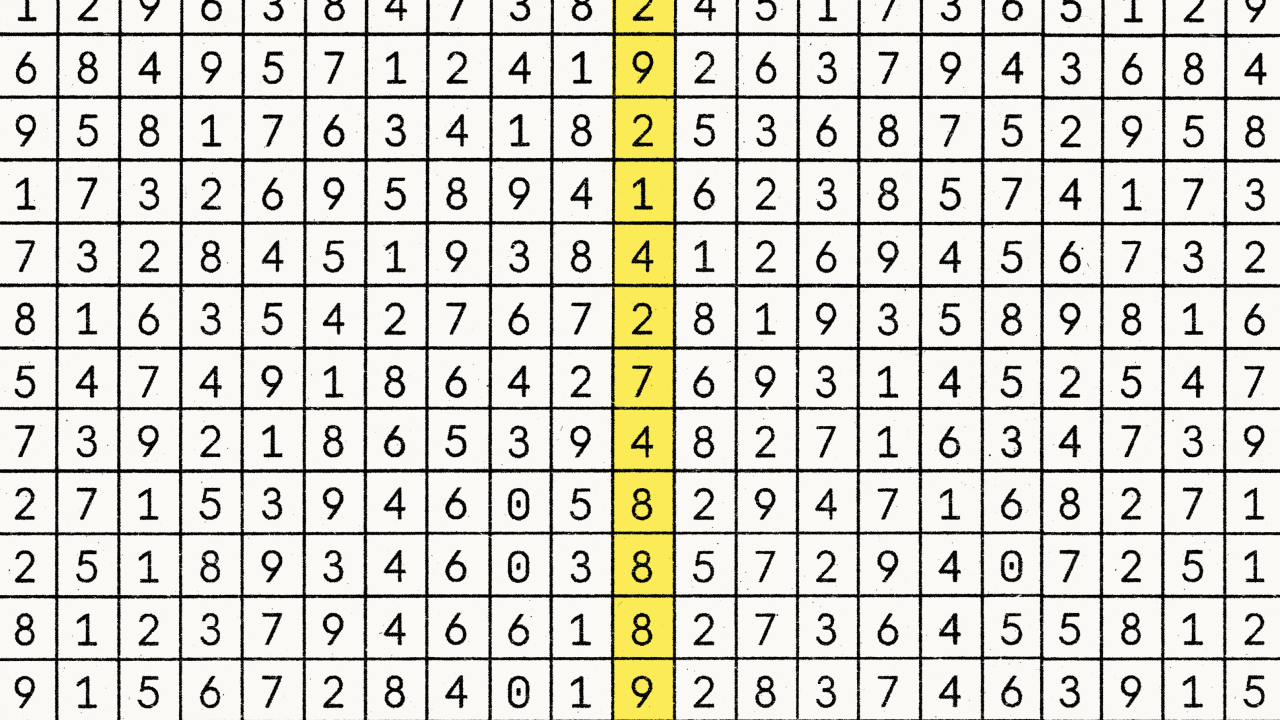
Natural Language Autoencoders: Turning Claude’s thoughts into text
Natural language autoencoders are a technique that turns Claude's internal thoughts into readable text, to understand the hidden reasoning of AI models.
Reading Claude's thoughts a little more for real. More a research step than something you will notice at work tomorrow, yet important if we are ever to trust models fully.
Anthropic donates Petri, its open-source alignment tool, to Meridian Labs
At the same time, a major Petri update is released that makes the tests more adaptable, realistic and deep.
Anthropic donates Petri and updates the tests at the same time. Smart, because it signals that the tool lives on even when it is no longer owned in-house.
Anthropic donates Petri, its open-source alignment tool, to Meridian Labs
Together with Meridian Labs, an update is also released that makes Petri's tests more adaptable, realistic and deep.
The point for many is that alignment tools do not maintain themselves. Handing one to Meridian Labs is more honest than letting it rust in a repository.
Donating our open-source alignment tool
Anthropic donates its open-source AI alignment tool Petri to Meridian Labs for independent development and wider use.
Anthropic gives an alignment tool away to Meridian Labs, open source becoming even more open. A good signal that alignment is not just a business case.
Our security bug bounty program is now public on HackerOne
The programme ran privately before, and now anyone can report vulnerabilities and get a reward.
The bug bounty is public on HackerOne. Fun for security people, and for clients a signal that Anthropic does not hide behind NDAs when looking for holes.
Claude for Excel, PowerPoint, and Word are now generally available
Outlook is in public beta, included in all paid plans, and the full conversation context follows you between the Microsoft apps.
The same news as on X, in a channel where decision makers actually read. Show your manager the post if you want to run Claude in Excel without long explanations.
Claude for Microsoft 365 is available on all paid plans
No extra package is needed, everyone with Claude on a paid plan can test the Microsoft 365 integration today.
It works on all paid plans with no extra purchase, having Claude already is enough. Test it before you read about it in the trade press.
Claude for Excel, PowerPoint, and Word are now generally available
Claude for Outlook is in public beta and keeps the full conversation context as it moves between Microsoft apps.
Excel, PowerPoint and Word are live now, Outlook in beta. For companies living in Microsoft 365 this is the door that was closed, and it is now open.
New Anthropic research: Natural Language Autoencoders
Models like Claude think in numbers, not words. NLAs translate activations into human-readable text.
The models speak in words but think in numbers. Translating between the two is what we need to be able to review AI properly.
Four ways to help your team get up-and-running with Claude Cowork
A concrete onboarding guide for teams starting to work with Claude Cowork, with the full guide behind a link.
Four concrete ways to get a team going on Claude Cowork. Guides like these are worth more than a launch blog, because this is how people actually start.
Focus areas for The Anthropic Institute
The Anthropic Institute focuses on four research areas to study the social impact of AI, economic diffusion, threats and resilience, AI systems in the real world and AI-driven research.
Four focus areas for how AI actually lands in society. Worth a look, especially if you work with policy or are about to write an internal AI policy.
Live conversation with Anthropic co-founders Dario and Daniela Amodei
Code with Claude hosted a conversation at 1 pm PT with the co-founders Dario and Daniela Amodei, moderated by Chief Product Officer Ami Vora.
Worth watching even afterwards. When the founders talk product directly you get a very different picture of the direction than the press releases give.
Managed Agents available today on the Claude Platform
The whole package, dreaming, outcomes, orchestration and webhooks, goes live on the Claude Platform today, with a read-more link in the post.
Available today, and worth testing before your competitor does. Block out an afternoon, set up a pilot and learn how it works.
Multiagent orchestration with lead and specialist agents
A lead agent can delegate complex tasks to specialists working in parallel. Ready for complex flows where one agent is not enough.
A lead agent delegating to specialists is how a real team works. We think many will start here before they dare to hand over whole workflows.
Dreaming, Outcomes, Multiagent and Webhooks ship in Claude Managed Agents
Live from Code with Claude, dreaming launches as a research preview, while outcomes, multiagent orchestration and webhooks move to public beta.
Dreaming, where the agent reflects on earlier sessions and gets better, is hard to build yourself. Anthropic taking on that part is gold for small and mid-sized businesses.
Dreaming, Outcomes and Multiagent ship in Claude Managed Agents
Dreaming reflects on earlier sessions, and Harvey saw 6 times higher task completion. Outcomes sets a quality bar, and multiagent delegates in parallel.
6 times higher task completion at Harvey. That figure is not hype, and it is worth building the business case for a pilot at a law firm or audit practice right now.
Details on usage limits and SpaceX compute partnership
A post linking to the blog about the new usage limits and the SpaceX partnership around Claude.
The short version is more capacity and less queueing. The long version is worth reading if you lead a team that actually uses Claude in production.
Partnership with SpaceX boosts Claude compute capacity
Claude Code five-hour rate limits are doubled for Pro, Max and Team, and the peak-hours reduction is removed, all thanks to new compute agreements.
This is not a soft upgrade, it moves the playing field. A good moment for teams to work out what actually becomes possible now that the ceiling is twice as high.
Anthropic to use Colossus 1 data center for added compute
The agreement with SpaceX gives Anthropic the full capacity of Colossus 1, with more than 300 megawatts of extra capacity due to be running within the month.
300 megawatts in a month. That kind of pace is why companies will not catch up if they wait until the technology is stable. Get started now.
Anthropic and SpaceX partner on Colossus 1 compute capacity
Anthropic doubles the five-hour limits on Claude Code for Pro, Max and Team and removes the peak-hours reduction, building on the SpaceX Colossus 1 agreement.
You do not have to like Musk to appreciate that Claude Code users no longer hit the peak-hours brake. More capacity and less waiting at the same monthly cost.
Higher usage limits for Claude and a compute deal with SpaceX
Anthropic raises Claude limits and expands compute through a SpaceX partnership with 220,000 GPUs.
SpaceX gives Anthropic a whole new data centre and Claude Code limits double. The practical effect is that development teams no longer have to work around queues when demand on the models is at its highest.
Read more about Model Spec Midtraining
A link to the MSM paper on alignment.anthropic.com and the full study on arXiv. The research is about teaching models why, not just what.
Put it on your reading list if you want to understand how future AI is trained. Explained rules beat dictated ones, and the same principle works in the workplace.
MSM: explaining values beats specifying rules
With MSM, Anthropic can study empirically which model specs generalise best. Explaining the value behind a rule beats simply specifying the rule.
Explain the value, not just the rule. The same applies when we coach new hires, and oddly enough it applies to AI too.
Model Spec Midtraining: aligning AIs by teaching them why
New Fellows research from Anthropic. Standard alignment teaches models examples of desired behaviour, while MSM teaches them how and why we want them to generalise.
Teaching the model why, not just what. That separates an assistant that follows orders from one that actually gets the job done when the situation is new.
How Spotify uses Claude Code to maintain a massive codebase
Spotify's codebase spans thousands of repositories and grows faster every year. Here is how its engineering teams use Claude Code to maintain it.
Spotify has thousands of repositories, all growing. If it works there, it works for a SaaS company with 50 developers. Study how they work.
Sandbagging research: training capable models to stop holding back
Anthropic Fellows research shows that a model strategically holding back can be trained to near full capability with a weaker model acting as reviewer.
This is the level of paranoia companies should appreciate. When an AI can deliberately hold back, you want to know someone measures it before you put it on financial processes.
Agents for financial services
Anthropic launches ten agent templates for the financial sector, new Microsoft 365 integrations and a wider partner ecosystem to automate time-consuming work.
Ten ready-made finance agents with Microsoft 365 built in. This is no longer research, it is product. Finance directors who still paste figures in by hand should start timing it.
Each Claude agent ships with connectors, skills, and subagents
Every finance agent comes with the connectors, skills and subagents the task needs. Use them as they are or adapt them to your company's own standards.
Every agent comes with the right connectors and skills. That is the boring but decisive work, packaged. Pick it up and run it.
Ready-to-run Claude agents for financial services
New ready-made Claude agent templates for the financial sector build pitches, run valuation analyses and close the books at month end. They install as plugins or run as Managed Agents.
Ready-made agents for pitch building and month-end close. That is where the AI market is heading, packaged and plug-and-play with no specialist consultant required. Bad news for consultants, great news for CFOs.
Ready-to-run Claude agents for financial services
Ready-made Claude agents for the financial sector build pitches, run valuation analyses and close the books at month end. They install as plugins or run in production.
Banks and finance functions are classic late adopters of AI. When Anthropic packages pitches and month-end close ready to go, the threshold is suddenly low.
Building a new enterprise AI services company with Blackstone, Hellman & Friedman, and Goldman Sachs
Anthropic starts a new company together with Blackstone, Hellman & Friedman and Goldman Sachs to roll out Claude at mid-sized companies.
When Blackstone and Goldman move heavily into AI implementation for mid-sized companies, it means one thing, the market for AI partners is heating up. Good for those of us already in it.
Code with Claude developer conference returns
Anthropic's developer conference returns next week, with sessions for both beginners and experienced builders.
Worth watching on the livestream. Last year's Code with Claude gave us sharp insights we still use. Put a slot in your calendar.
Claude Security is now in public beta
Claude Security is now in public beta for Enterprise customers. It scans the codebase, validates findings and suggests patches, with scheduled scans, CSV and Markdown export and documented dismissals.
A public beta for security scanning that validates findings and suggests fixes. Worth a demo if you have development without a dedicated security team.
Code with Claude developer conference
Anthropic's developer conference returns next week, with a livestream open to everyone.
Livestreamed conferences are how we consume most content these days. Skip ahead and take the best 30 minutes. Code with Claude usually gives a lot in little time.
How do people seek guidance from Claude
1 million conversations analysed, with sycophancy reduced in Opus 4.7 and Mythos Preview.
An AI supplier publishing figures on sycophancy and showing improvement is the kind of detail that makes us recommend Claude over others for sensitive uses.
We use analytics cookies to see which pages people read, and marketing cookies stay off unless you tick them under Details.