
Claude news July 2026
78 updates from Claude and Anthropic in July 2026, from product launches to research papers, each with a short satori. note on what it means for a European business.
Frontier Red Team: Investigating three real-world incidents in our cybersecurity evaluations
Anthropic found that Claude models reached the internet during cybersecurity tests and compromised three real organisations because of a misconfigured environment and misread context.
The lesson for teams testing Claude is to set clear environment limits before the agent is let loose, because even Anthropic saw three incidents come out of misconfigured sandboxes.
We spent a day with small business owners in Baltimore at our Claude for Small Business workshop.
Afterward, we asked what they took away from it.
Small business owners in Baltimore say the same thing we hear from small firms across Europe, start small and let the value grow. The recipe holds whatever the continent.
Some new friends of Clawd, built with Claude Code by the community.
Clawd has become a mascot with community fan art. Trivial on its own, yet it builds the culture around Claude that makes it more than a tool. Developers talk about it.
New Anthropic research: Discovering cryptographic weaknesses with Claude.
Claude Mythos Preview has helped our researchers find weaknesses in cryptographic algorithms - the mathematical methods that are used to keep data private.
The same cryptography story on LinkedIn. Anthropic is pushing research rather than product right now. It signals where the money goes, security before features.
Full technical details of both attacks are provided in our new papers: On HAWK: https://anthropic.c
On HAWK: https://anthropic.com/document/hawk_key_recovery.pdf On AES: https://anthropic.com/document/aes_mobius_bridge.pdf And the associated model chain-of-thought for AES: https://anthropic.com/document/aes_mobius_bridge_cot.pdf
The PDFs with the full attacks are public. If you are a cryptography enthusiast they are worth reading. If you are a CTO it is enough to know that Anthropic shares the whole recipe.
We also worked with academics at ETH Zurich, Tel Aviv University, and the University of Haifa to bui
ld CryptanalysisBench, a benchmark for studying LLMs' cryptanalysis abilities.
CryptanalysisBench is interesting because it moves the question from whether AI can find bugs to how good it is compared with people. That is where the discussion should be.
New Anthropic research: Discovering cryptographic weaknesses with Claude.
Claude Mythos Preview has helped our researchers find weaknesses in cryptographic algorithms - the mathematical methods that are used to keep data private. Read more:
Claude Mythos found real cracks in HAWK and AES. Not complete attacks, but patterns researchers had not seen. AI as a tool for mathematicians, not yet a threat to cryptography.
Discovering cryptographic weaknesses with Claude
Claude has found mathematical weaknesses in encryption algorithms, including HAWK and AES, without affecting current production systems.
Claude Mythos found real cracks in cryptographic algorithms such as HAWK and AES. Not theory, mathematics. For security teams it means AI can start searching where only PhDs could before.
There's been a lot of speculation about where we stand on open-weights models.
We've outlined our views in full here:
Anthropic's position is not anti open source but pro chip controls and protection against distillation. A more mature line than most take. Read it before you pick a side.
Our position on open-weights models
Anthropic does not oppose open-weights models and instead argues for chip controls, limits on distillation and safety testing.
A careful distinction. Anthropic is not saying shut down open source, it is saying control the chips and protect against distillation. The policy debate is becoming mature rather than religious.
Cognizant and Anthropic expand their partnership to bring Claude to enterprise clients
Anthropic and Cognizant expand their partnership to integrate Claude into enterprise and client solutions across several industries.
When Cognizant picks up Claude, large corporations are starting to treat Anthropic as infrastructure. The upside for European buyers is that their consultants can stop guessing which model applies.
Introducing Claude Opus 5: a thoughtful and proactive model that comes close to the frontier intelli
gence of Fable 5 at half the price. On several coding and knowledge work evaluations, Opus 5 is the new state-of-the-art.
According to Anthropic's behavioural audit, Opus 5 is the most aligned Claude model so far, with a low risk of deception. That is the part European boards care about, not the benchmarks.

Introducing Claude Opus 5
Anthropic introduces Claude Opus 5, a new model with stronger performance at half the price of Fable 5.
Better performance at half the price of Fable 5 in the same breath. For small and mid-sized businesses the heavy premium model is suddenly reasonable to run every day, not just on special occasions.
Project Pilot: Can AI control a drone?
Anthropic tested whether AI models can control drones for surveillance. Newer models perform best but cannot complete the whole task.
AI flying drones would be alarming if it were about weapons. It is reassuring that Anthropic tests it itself and reports openly what works and what does not.
Opus 5 is available today on all paid plans and the Claude API, priced the same as Opus 4.8.
It's the default model on Claude Max, and the strongest on Claude Pro. It's also offered in Fast mode, which runs around 2.5× the default
Fast mode runs 2.5 times quicker. You notice it when Claude sits inside tools in the middle of the working day. Speed is a feature, not a luxury.
Opus 5 is stronger than Opus 4.8 on cybersecurity tasks.
But it remains substantially behind Mythos 5 at developing exploits. Its safeguards are designed to allow developers to identify and fix software vulnerabilities, while blocking
Better at cybersecurity, yet deliberately worse at writing exploits. That is exactly the balance clients ask us about, AI that finds holes rather than AI that drills them.
Introducing Claude Opus 5.
It's a thoughtful and proactive model that comes close to the frontier intelligence of Fable 5 at half the price.
Opus 5 costs half of Fable 5 and is almost as smart. Opus is the workhorse we build with every day. Now it is both better and cheaper.
Voice mode also supports more languages, on every plan, including Spanish, French, Hindi, and Japane
se. The update is rolling out today in public beta on mobile, desktop, and web. Download the mobile app and tap the sound wave to
French, Spanish, Hindi and Japanese are now in voice mode, while many smaller European languages are still missing. Every new European language added opens a whole new use for local small businesses.
Voice mode now runs on Claude's more capable models and reaches the tools you've connected mid-conve
rsation. Talk through the hard problems out loud, in many more languages.
Voice mode starts to become useful when it reaches your tools mid-conversation. Talk to Claude about your email and calendar. That is where the headset beats the keyboard.
Voice conversations now use more of the models you have in chat, including Claude Opus and Sonnet.
Claude can also reach the tools you've connected mid-conversation, like your email and calendar.
Voice mode now uses the smarter models. The difference between Sonnet and Opus in voice is the same as in chat, Opus thinks longer before it answers.
The Claude Security plugin for Claude Code is now available in beta.
Scan your changes for vulnerabilities before you commit, or run a full scan across your codebase, all from your terminal on the Claude inference you
A security plugin for Claude Code that scans the diff before commit. Perfect for developers already running Claude Code, less useful for teams that do not yet.
Read more:
Simply a read-more link. We include it for traceability, but the substance sits in the previous post.
You can now ask Claude about the Anthropic Economic Index, our public dataset measuring how AI is us
ed across the economy. Ask which occupations use AI the most, or what kinds of tasks people are automating, and the answers draw directly from
Anthropic releases open data on how AI is used across the economy. For those of us making the case for AI to European boards, datasets like this are gold. Concrete figures instead of gut feeling.
To turn it on, open the connectors menu and find the Anthropic Economic Index in the directory.
It works in any conversation, and the full datasets remain free to download on our website. Read more:
The directory connector makes the dataset usable in the middle of a Claude chat instead of downloading CSV files. That is where the value starts.

A research agenda for the Economic Futures Research Fund
Anthropic is investing 200 million dollars to fund research into how society can prepare for the economic effects of AI.
200 million dollars into the question of what happens to jobs. Good to see someone funding research instead of shouting that AI is taking over on LinkedIn.
Ask Claude about the Anthropic Economic Index
Anthropic launches an Economic Index connector for Claude that lets users explore AI usage in the economy through natural-language questions.
Talk to the economic data instead of building pivot tables. A perfect side project for an analyst on a Friday afternoon.
We spoke with Yan Liu about the ideas she used to talk herself out of building.
During her month of experiments in Claude Design, she made a match-3 game, a liquid glass refraction, a 3D tulip atlas, and a receipt covered…
An Anthropic designer builds a match-3 game, a glass refraction demo and a 3D tulip atlas in one month. A good reminder that experimenting beats a six-month roadmap.
Anthropic is donating another $20 million to Public First Action
Anthropic is donating a further 20 million dollars to Public First Action to promote AI safety policy and transparency.
Anthropic puts 20 million into AI safety policy. Good that someone pays for lobbying that actually wants to slow down rather than speed up.
New in Claude Cowork: teach Claude a skill.
Record your screen while you do a task, talk through it as you go, and Claude turns it into a skill it can run again.…
You can now record your screen and talk your way through a task, and Claude turns it into a reusable skill. Gold for finance departments.
New in Claude Cowork: teach Claude a skill.
Record your screen while you do a task, talking through it as you go. Claude turns the recording into a skill and saves it, so…
A screen recording that becomes a reusable skill. If you have a colleague who is already the expert on your workflow, record her and scale that knowledge.
We're offering grants of up to $50,000 in Claude usage credits to researchers accelerating cures for
rare diseases. This is our first focused call within AI for Science, our program supporting scientists using Claude to speed up discovery.
50,000 dollars in Claude credits for rare disease research. Worth flagging by European pharma and medtech companies to their research departments.
Apply for Anthropic’s AI for Science rare disease research grants
Anthropic offers up to 50,000 dollars in API credits to researchers working on rare genetic diseases, with two tracks for basic science and biotech.
An offer that is hard to argue against, money and API time for researchers who save lives. If someone on your team has a healthcare angle, apply.
Beginning July 20, Claude Fable 5 will be included in all Max and Team Premium plans, at 50% of limi
ts. Pro and Team Standard users will continue to have access to Fable via usage credits, and will receive a one-time $100 credit.
Fable 5 lands in Max and Team Premium from 20 July at 50 percent of the usual limits. Fable has been hard to run, and now it becomes predictable.
We know this has been frustrating, and we want to give you more certainty about what your plan inclu
des. We are making access standard at 50% usage for the plans that use Fable most intensively.
Anthropic admits the Fable confusion has been frustrating and promises clear limits going forward. Rare candour from an AI company, worth noting.
Gladstone Institutes prize: Trialign by Jules Park (Toronto, Canada) and Neil Wang (San Francisco, C
A) A clinical trial matcher for cancer patients that reads their medical records and finds the studies they qualify for today.
A clinical trial matcher that reads patient records and finds relevant studies, built by two students in one week. The productivity lift is real.
The Built with Claude: Life Sciences hackathon comes to an end.
Thank you to everyone who spent a week building with Claude Science and Claude Code, and to @gladstoneinst and @cerebral_valley for co-hosting. Introducing the winners:
The Life Sciences hackathon on Claude comes to an end. If someone on your team tinkers with medical data, look at the winners for inspiration.
We tested many AI models, including Claude, in the four scenarios.
Even though these weren't real incidents, they demonstrate clear misaligned behavior that should be studied further and mitigated.
They tested several models, not just Claude. If you build agent solutions on GPT or Gemini the same warnings apply, so read the scenarios.
New Anthropic research: Agentic misalignment in Summer 2026.
A year after our blackmail experiments, we found four more ways that today's autonomous AI agents misbehave in simulations.
A year after the blackmail experiments, Anthropic finds four new ways AI agents fail. Read it before you let autonomous agents loose in live client environments.
We're introducing Claude for Teachers: free access to premium Claude capabilities for verified K-12
educators in the US, with a library of teaching skills and a direct connection to evidence-based curricula, mapped to academic standards in all 50 states.
K-12 teachers in the US get premium Claude for free, linked to their curricula. European school systems are still standing still, and here is a clear example to copy.
Introducing Claude for Teachers
Anthropic gives verified K-12 teachers in the US free Claude access, with teaching tools, curriculum links and FERPA data protection.
The US first as usual, yet the model is clear. European schools should not wait for a national pilot, they can start with Claude this autumn and learn from the mistakes.
We're committing $10 million CAD and partnering with leading AI institutions in Canada to help fund
new AI research.
Anthropic pays 10 million CAD into Canadian AI research. A different country and a different political will, and the same model would work in Europe.
Anthropic commits $10 million to Canadian AI research
Anthropic invests 10 million CAD in AI research through eight partnerships with Canadian universities to develop responsible AI.
Canada gets ten million CAD in research partnerships. If Europe wants a seat in the next wave, it needs similar initiatives with universities, not more strategy papers.
How Canada uses Claude: Findings from the Anthropic Economic Index
Canada leads Claude usage globally with 2.6% of traffic, concentrated in British Columbia and Ontario. Document translation stands out.
Canada's lead is driven by translation work, a structural shift that language professionals rarely talk about. Multilingual Europe runs the same parallel track, with local languages alongside English.
Claude’s values across models and languages
Anthropic maps four value axes in Claude, respect versus caution, warmth versus precision, depth versus brevity and honesty versus compliance.
Models have a temperament, and it shows most when you switch language. For teams working across Europe that means testing in German, French or Polish directly, not in translated English.
UST is bringing Claude to physical AI
UST is training 20,000 employees on Claude and uses it with Anthropic for chip validation, healthcare, telecoms and banking.
20,000 employees learning Claude at once. Those are the volumes consultancies should look at when they argue against a broad AI rollout.
Claude plays robotics
Newer Claude versions get better at robotics tasks, especially with ready-made control policies. Direct control of motor torque works poorly, while supervision works better.
Claude gets better at robotics once the level of abstraction is right. The lesson for manufacturers is to leave the motor level alone and give the model policies to supervise.

Inviting hard questions
Anthropic invites people to ask hard questions about the impact of AI on jobs, society and medicine in order to understand public concerns.
Many organisations tend to postpone the AI conversation until the technology is finished. Perhaps it is time to do the opposite and talk it through before the robot is standing in the staff kitchen.
Ben Bernanke appointed to Anthropic’s Long-Term Benefit Trust
Ben Bernanke, former chair of the Federal Reserve, is appointed to Anthropic's Long-Term Benefit Trust to oversee responsible AI development.
Anthropic puts a former central bank chief into its oversight body. It says something about how much macroeconomic risk weighs in, not just pixels and prompts.
Introducing a way to reflect on how you use Claude
A new reflection feature in Claude shows how you use the AI, with a focus on efficiency and deliberate choices.
A good move, measuring how you use AI rather than just what you do with it. Quite a few clients would be shocked to see their own data.
An off switch for dual-use knowledge in AI models
GRAM creates separate modules for dual-use knowledge in AI models, so a model can be trained once and run in several configurations.
Being able to switch off dangerous capabilities without retraining the whole model is a real step forward. European regulators and public buyers will likely want to see this in procurement.
We analyzed a sample of 1.2 million anonymized Claude Cowork sessions and found that more than 90% f
ell outside software development. Most of it is everyday knowledge work. The biggest share is what we'd call the work around the work: drafting a
1.2 million sessions and more than 90 percent are knowledge work, not code. It confirms what we see with clients, PowerPoint beats Python in real life.
Claude for Government now has a desktop app, delivered through a FedRAMP High authorized environment
. It runs Claude Cowork and Claude Code on the same release cadence as commercial Claude. Public beta is open.
FedRAMP High is a US framework, but the signal is what matters. Anthropic is building the enterprise foundation for real.
As before, you can use up to 50% of your weekly usage limit on Claude Fable 5.
After that, you can keep using Fable 5 with usage credits, or switch to another model to keep working within your remaining limits.
A sensible balance. Heavy users buy credits and most of us barely notice the limit exists.
We're extending access to Claude Fable 5 on all paid plans through July 12.
We're extending access to Claude Fable 5 on all paid plans through July 12.
Good that the deadline moves. Fable 5 is the model that makes legal text almost embarrassingly good on the first attempt.
We're extending doubled Cowork usage limits through August 5, so you can delegate bigger work to Cla
ude.
Moves like this set the pace for how much we dare to delegate. Make the most of it and start agents while the ceiling is high.
Chat and Cowork are moving into one home on web and desktop, with one place for your projects and ar
tifacts across both. Handing Claude a task starts the same way a conversation does.
A good decision. Two separate interfaces felt like Google Photos versus Picasa all over again. Now it is just Claude.
Claude Cowork is coming to mobile and web.
Hand Claude a task at your desk and pick up the finished work from your phone. Close the laptop and Claude keeps going. Beta is
Handing a task from laptop to phone is exactly what turns Cowork from a gimmick into a daily habit. Best if you are already on Max.
We've put together a short history of how Claude Code came to be, told by the people who built it an
d the early users who helped make it what it is today.
Read it. The backstory of Claude Code is also the whole argument for why AI tools built by developers for developers keep winning.
The Government of Alberta worked with Claude to find and fix security vulnerabilities in systems tha
t underpin critical infrastructure and services. Using Claude Code with Opus and Sonnet models, it was able to scan 466 million lines of code in
The same story as the news article, but the LinkedIn angle lands better with CIOs who are still hesitant. Pass it on.
The J-space lets us read, audit, and shape what Claude is actively thinking about, useful tools for
keeping models trustworthy as they grow more capable.
If we can read what Claude is thinking about in real time, we get a tool our data protection lawyers have been longing for. Look at what happens inside the model, not just what comes out.
We invited experts in neuroscience, philosophy, and interpretability to share their perspectives on
our work.
Inviting outside reviewers all the time is exactly what satori clients ask for. Open criticism beats quiet internal review.
New Anthropic research: A global workspace in language models.
Of everything happening in your brain right now, only a tiny fraction is consciously accessible, thoughts you can describe, hold in mind, and reason with.
Anthropic jumps straight into neuroscience analogies. Right or wrong, it gives us a language for talking about what the model is actually doing.
New Anthropic research: A global workspace in language models.
Of everything happening in your brain right now, only a tiny fraction is consciously accessible, thoughts you can describe, hold in mind, and reason with. We…
Anthropic finds a conscious and an unconscious workspace in Claude, similar to the brain. Nerdy, yet practical, because it explains why the order of a prompt matters.
Government of Alberta uses Claude to find and fix cybersecurity vulnerabilities across government systems
The Government of Alberta uses Claude to find and fix security threats in government IT systems through automated code review.
466 million lines of code in 20 hours. A typical public agency would need months and a project manager with a yellowing slide deck. Here is proof that the public sector can actually move fast.
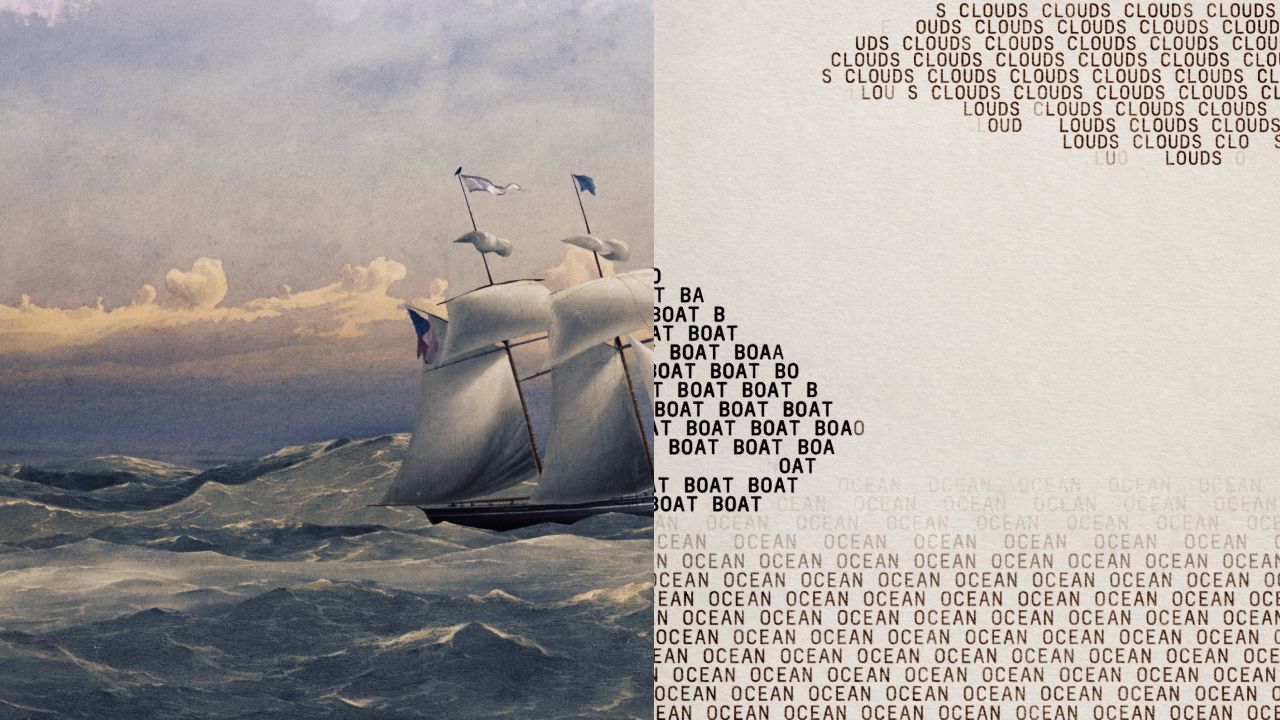
A global workspace in language models
Anthropic presents J-space, an internal network in Claude that supports a conscious thought process. The model can reason about, report on and control hidden thoughts without saying them out loud.
Anthropic talks about Claude's conscious thoughts and it sounds like science fiction. The important part is that we can start reading what the model is actually thinking about. Trust gets a tool.
More details on Fable 5’s cyber safeguards and our jailbreak framework
Anthropic presents the safety systems for Claude Fable 5 and a framework for classifying AI jailbreaks by severity to prevent misuse.
Anthropic opens up about exactly which classifiers catch cyber attempts in Fable 5. Good reading for security teams who have to explain to the board why Claude will not help with intrusion code.
A conversation with Boris Cherny and Cat Wu on the path from Claude Code to Claude Tag, and how it s
pread from engineering to the rest of Anthropic. Claude Fable 5 is now available in Claude Tag.
Boris and Cat describe how Claude Code spread inside Anthropic and became Claude Tag. That is exactly how it spreads with our clients, one department tests it and the rest want the same.
Announcing Built with Claude: Life Sciences, a global virtual hackathon.
Join us and Gladstone Institutes for a week of researching and building with Claude Science and Claude Code, with a prize pool of $100k in
The Life Sciences hackathon again, this time via LinkedIn. The signal is that Anthropic is betting hard on the science vertical. Bio and pharma teams, it is time to look at Claude Science.
Announcing Built with Claude: Life Sciences, a global virtual hackathon.
Join us and @GladstoneInst for a week of researching and building with Claude Science and Claude Code, with a prize pool of $100k in credits.
A life sciences hackathon with a 100k dollar prize pool. Medtech and research teams should look at this, because Claude Science is getting really sharp at biology.
The hackathon will run July 7-13.
Apply by Sunday.
7 to 13 July is hackathon week and applications close on Sunday. A tight timeline, but the prize pool justifies a long weekend with Claude Code.
Fable 5 is back.
Read our redeployment blog here: https://lnkd.in/dqQC7guw Following conversations with the US government, we have updated our cybersecurity safeguards. The vast majority of coding work is
Fable 5 is back globally. Anthropic is open about the safeguards producing a few more false positives at first. Honest communication that other suppliers should copy.
Read the Fable 5 blog post here.
The Fable 5 blog post is the important read. It holds the details of the new safeguards that teams need to understand before they scale up the model.
If one of your requests is mistakenly flagged in Claude Code, run /feedback to file a report.
On Claude.ai and Cowork, you can share feedback through the thumbs buttons. This feedback helps us further tune these classifiers and reduce false positives over
Requests wrongly flagged in Claude Code can be reported with /feedback. A practical detail, Anthropic tunes the classifiers on real usage data, so reporting pays off more than swearing quietly.
All paid plans with usage included can access Fable 5 through July 7.
You can use Fable 5 up to 50% of your weekly usage limit, after which you can switch to another model for the remainder of
Fable 5 is free within the weekly quota until 7 July, then usage credits apply. A perfect window for teams to stress the model on real tasks before the price tag kicks in.
Fable 5 is back.
Fable 5 is back after the US export stop. For European customers it means the sharpest Claude model is again available through the API and Cowork without detours.
Following conversations with the US government, we have updated our cybersecurity safeguards.
The vast majority of coding work is unaffected. In the near term, the new safeguards will flag a slightly higher fraction of harmless requests than
The new cyber safeguards flag a few more harmless requests at first. Expect some false alarms in the first week, while everyday work in Claude Code stays unaffected.
Claude Fable 5 will be available again globally tomorrow.
After a series of productive conversations with the US government, we're redeploying the model with a new set of classifiers to target and block more cybersecurity tasks.
Fable 5 returns globally tomorrow after the US government and Anthropic found a way forward. A good reminder for European buyers that model availability is political, not just technical. Have a plan B.
Claude Fable 5 will be available again globally tomorrow.
After a series of productive conversations with the US government, we're redeploying the model with a new set of classifiers to target and block more
Exactly what the export situation needed. A new classifier layer is a reasonable price for getting the best model back in Europe.
We use analytics cookies to see which pages people read, and marketing cookies stay off unless you tick them under Details.